America isn’t just getting older — it’s accelerating into a demographic reality that is reshaping residential and healthcare demand. The USDA map below makes this clear:
-
In 2000, only isolated counties had 20% or more of their population age 65+
-
By 2023, large portions of the country — especially outside major metros — have crossed that threshold
This isn’t a subtle pattern. It’s a structural shift.
1. This isn’t a lifestyle trend — it’s a healthcare shift.
More older adults are moving into assisted living or memory care because of medical necessity, not discretionary choice. Amenities matter, but access to healthcare is redefining the move-in decision.
2. Memory care demand is rising sharply.
Nearly half of Baby Boomers reaching age 85 experience cognitive decline. For millions, 24/7 care becomes the critical driver of housing decisions.
3. Secondary and nonmetropolitan markets are aging faster.
These regions are hitting “older-age county” status more quickly than urban cores, creating above-average penetration for care-based residential models. This makes these markets strategically important for operators and capital partners.
4. For investors, this creates durable and resilient demand.
Demand is being driven by biology, longevity, chronic conditions, and family support gaps—not consumer preference cycles. That makes this one of the most stable, necessity-based sectors in residential real estate.
At Mainstay Financial and Mainstay Senior Living, this is the foundation of our focus on secondary markets. These communities represent the intersection of demographic inevitability and long-term operating opportunity.
Key Question: How is your organization aligning its capital, development, or operating strategy with this shift from lifestyle preference to healthcare necessity?
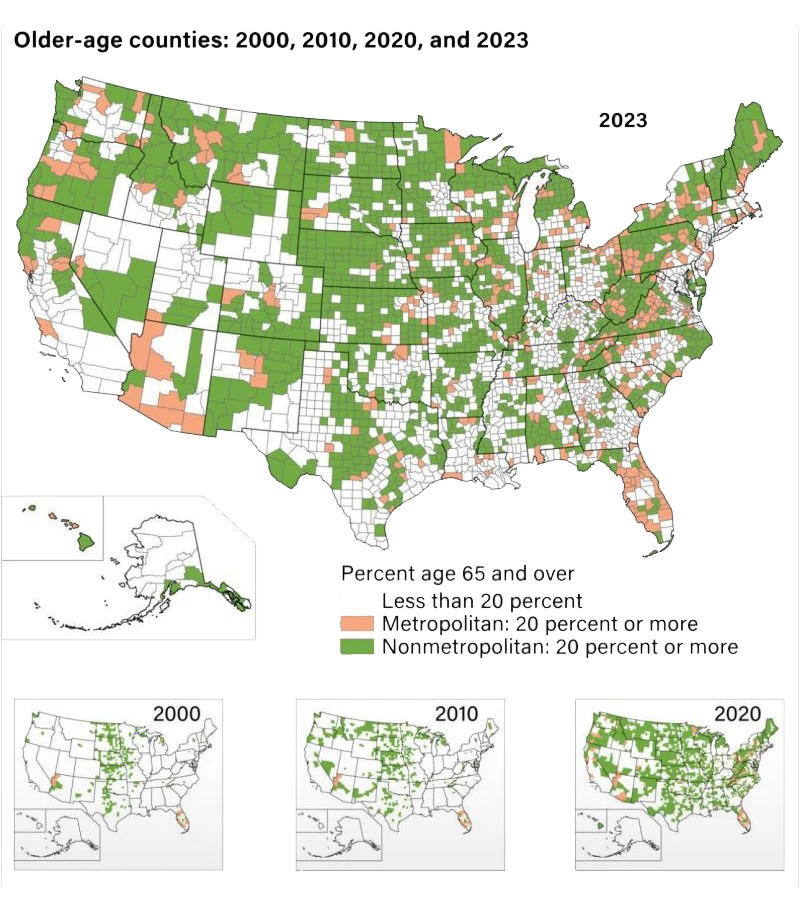
Source: USDA, Economic Research Service using data from the U.S. Bureau of the Census's decennial censuses in 2000, 2010, and 2020 and U.S. Census Bureau's Population Estimates, 2023.
Note: Older-age counties are defined here as those with 20 percent or more of their population ages 65 or older. Metropolitan status is defined using the 2023 Office of Management and Budget delineation for all time periods.
-----
About the Author: Tod Petty serves as Chief Investment Officer at Mainstay Financial Services & Mainstay Senior Living, guiding capital strategy and investor relations. He authors The Build Series—a collection of insights designed to bring clarity and discipline to senior housing investment.